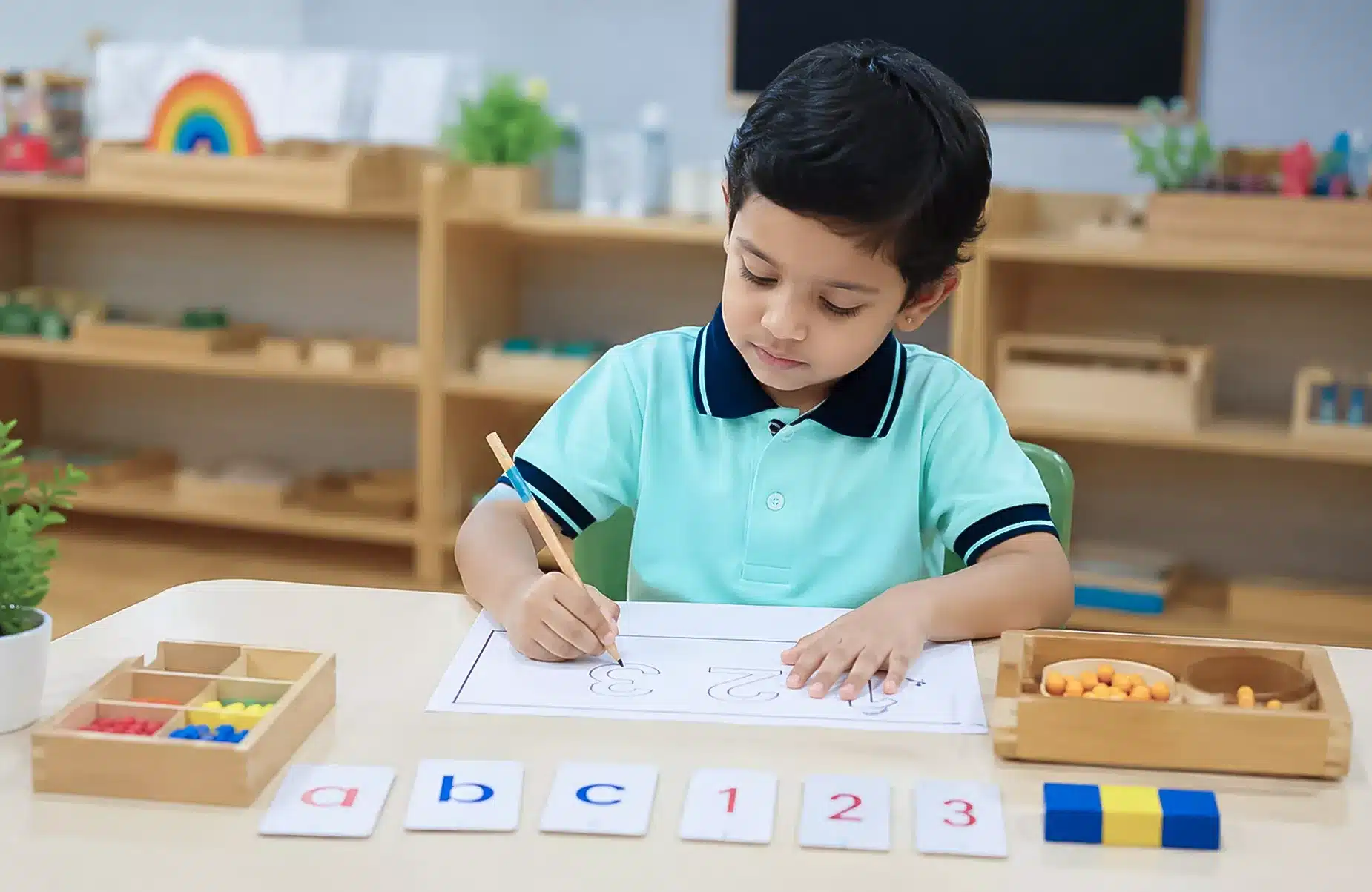
Play Schools in Gachibowli Hyderabad prepare children for primary school by building four foundations together – early literacy and numeracy, motor coordination, emotional regulation, and social confidence through structured play rather than rote drilling. Many children begin to sit, listen, ask questions, and work independently well before they ever enter a Grade 1 classroom. This combination of academic groundwork, independence, and emotional maturity can help children adjust more confidently when they start primary school.
Why Primary-School Readiness Matters at Play Schools in Gachibowli Hyderabad
Parents often assume “school readiness” means knowing the alphabet or counting to twenty – but it runs far deeper. Ask any experienced early-childhood educator, and they’ll say the same thing: a child who can recognise letters but can’t sit through a 30-minute lesson isn’t “ready.” Genuine readiness is built gradually through daily structure, turn-taking, and self-directed tasks – not last-minute drilling in the final pre-primary year.
This is where trained educators make the real difference. Teachers who understand developmental milestones spot gaps early a fine motor delay, a shy child avoiding group activities, a toddler needing extra support with attention span – and adjust accordingly. That kind of individualised, milestone-aware support is one of the clearest signs of a well-run early years programme, and it’s worth asking specifically about educator qualifications and ongoing training when you enquire at any school.
Core Skills Play Schools Build Before Primary School
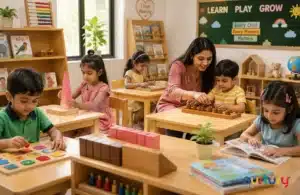
A good pre-primary curriculum works across several developmental areas at once, rather than isolating “academics” from “play.” Typically, this includes:
- Pre-literacy skills – Phonetic awareness, vocabulary building, and pencil-grip practice.
- Early numeracy – Number recognition, sorting, patterns, and basic logical reasoning.
- Fine and gross motor skills – Cutting, threading, running, balancing, and hand-eye coordination.
- Social-emotional learning – Sharing, waiting turns, expressing feelings, and resolving small conflicts.
- Independence and self-help – Packing a bag, using the washroom independently, and following multi-step instructions.
Consistent practice with these skills can make classroom routines feel less overwhelming when children move into Grade 1.
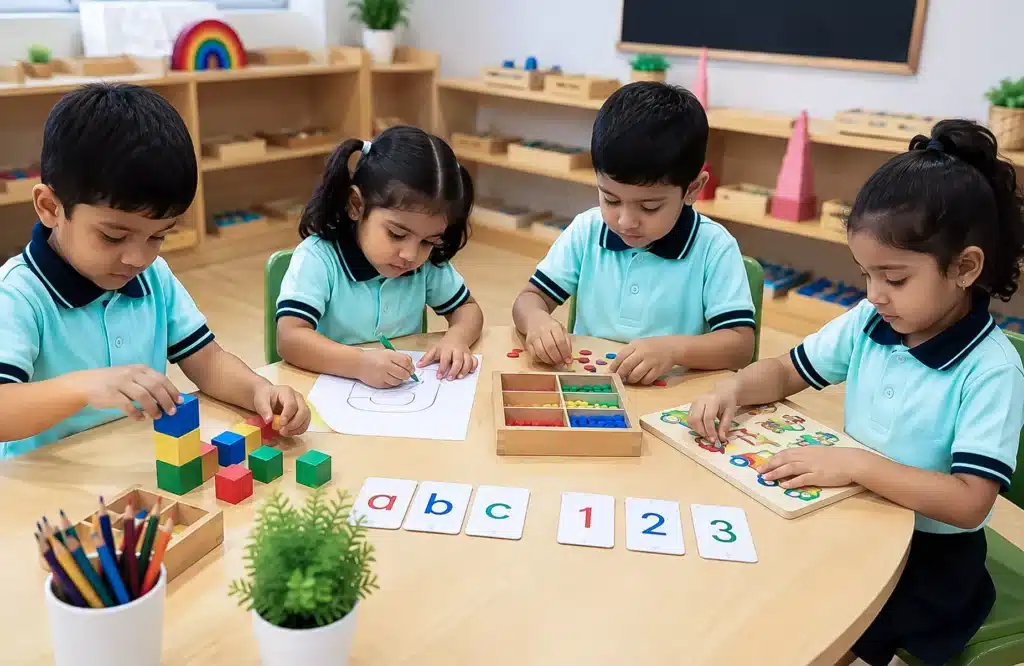
How Montessori-Inspired Learning Can Support School Readiness
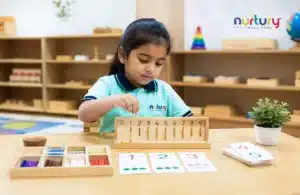
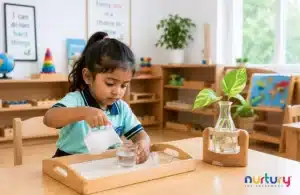
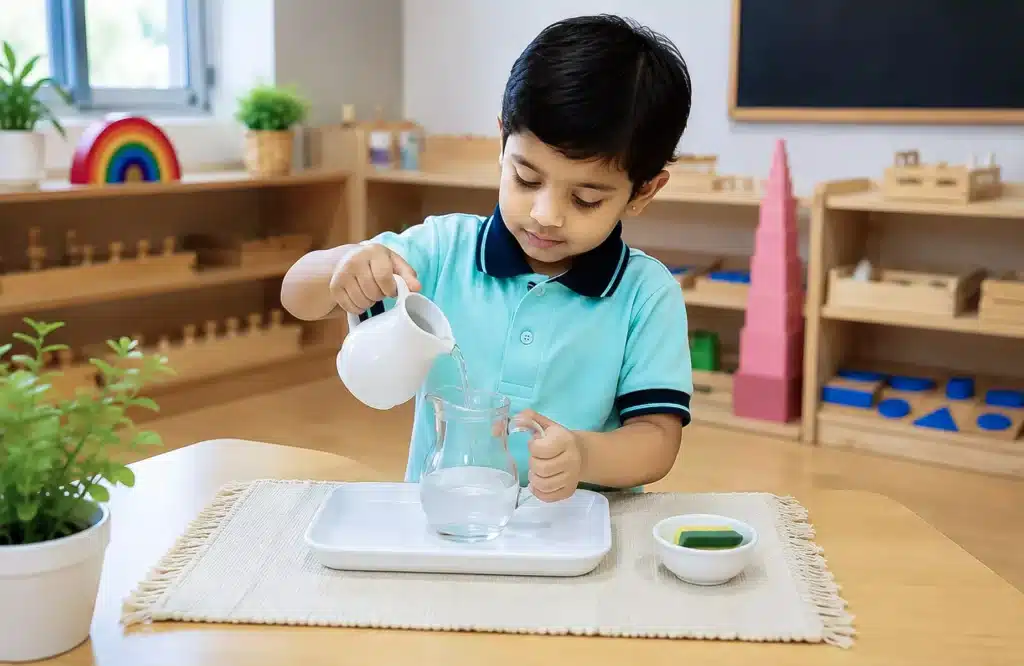
Montessori-inspired and Montessori Schools in Gachibowli often place strong emphasis on hands-on learning, independence, and allowing children to progress at an appropriate pace rather than following a rigid, one-size-fits-all timeline. These activities can provide opportunities for children to practise concentration, problem-solving, sequencing, and independence – skills that can be just as important as early academic knowledge when children enter primary school. Practical-life activities such as pouring, buttoning, and sorting can also give children opportunities to practise sequencing, coordination, concentration, and independence – skills that may support the transition to primary school.
What to Check When Searching for a Play School Near Me
When parents search for a “Play School Near Me,” proximity is only one part of the decision. Here’s what actually signals a school takes the primary-school transition seriously, rather than treating pre-primary years as simple daycare time:
- Teacher-to-child ratio – A manageable group size helps teachers provide personalised guidance.
- Curriculum transparency – Ask to see a sample weekly plan, not just a brochure.
- Safety infrastructure – CCTV coverage, childproofing, and trained first-aid staff.
- Parent communication – Regular updates on developmental milestones, not just photos.
- School-readiness approach – Ask how the school gradually prepares children for classroom routines, following instructions, independent work, and group participation.
Choosing the Best Preschool in Gachibowli for Long-Term Readiness
When comparing options, the Best Preschool in Gachibowli for your child isn’t necessarily the one with the flashiest infrastructure – it’s the one whose curriculum documentation clearly maps each stage to a developmental outcome. Ask for a sample term plan, not just a prospectus. Schools that can clearly explain what children are expected to develop in areas such as phonics, numeracy, and motor skills give parents a better basis for evaluating their approach to school readiness. This can help parents distinguish a structured early-learning programme from one that primarily focuses on keeping children occupied.
Conclusion
The right early years environment supports far more than a child’s first report card – it can help children enter Grade 1 with greater familiarity, independence, and confidence. Play schools in Gachibowli Hyderabad that prioritise these habits gradually give children a stronger foundation to draw on when formal schooling begins. At The Nurtury Preschool, this readiness-first approach runs through every stage of the curriculum, from toddler play to Pre-Primary 2.
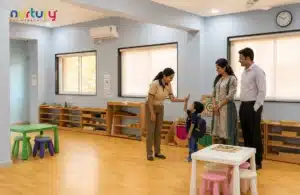
If you’d like to see this approach in action, schedule a visit or submit an admission enquiry to observe a classroom in session before you decide.
FAQs
1. How do Play Schools in Gachibowli Hyderabad actually prepare children for Grade 1?
They build reading readiness, number sense, motor skills, and independence through daily structured play, which can help children adjust more comfortably to formal schooling.
2. What should I look for in a play school near me before enrolling my child?
Check the teacher-to-child ratio, safety measures, curriculum transparency, and how the school communicates developmental progress with parents.
3. Are Montessori schools in Gachibowli good for building school readiness?
They can be, particularly when the program uses hands-on activities, encourages independence, and gives children opportunities to develop concentration, sequencing, and practical-life skills.
4. How early should I start visiting the best preschool in Gachibowli options?
Timelines vary by school and admission age, so it’s worth enquiring early, confirming each school’s specific age criteria and enrollment windows, and observing a classroom in session before you decide.